Bag Weight Starts at Empty
The conclusion first
- Size, capacity and even strap drop get published; weight often does not, because it is the number that makes a photo look less appealing.
- Yet it is the only spec that applies to every single minute of ownership.
- A laptop weighs what it weighs, and everything inside the bag is what you chose to carry — the empty bag is the fixed cost, the part you carry home from the shop before you have loaded anything into it.
Drawn from the opening of this entry.
A bag’s empty weight is the quiet spec. Size, capacity and even strap drop get published; weight often does not, because it is the number that makes a photo look less appealing. Yet it is the only spec that applies to every single minute of ownership. A laptop weighs what it weighs, and everything inside the bag is what you chose to carry — the empty bag is the fixed cost, the part you carry home from the shop before you have loaded anything into it.
The number most listings skip
Some brands treat weight as a feature and publish it on every product page. Longchamp lists the Le Pliage Original M tote at 282 grams, in a nylon canvas with leather trim, at dimensions of 28 by 26.5 by 15.5 centimetres. Bellroy documents its Tokyo Wonder Tote 12L at 600 grams and the 15L version at 700 grams — a step up explained by a padded laptop sleeve, a zip closure and a fuller organisational layout rather than by size alone. Same broad category, same rough silhouette, and more than double the tare weight between them.
That spread is the useful fact. When a brand documents weight, it also documents what the weight bought: the Bellroy figure pays for structure and a suspended laptop compartment; the Longchamp figure pays for almost nothing except fabric and a snap. Neither is wrong. But a shopper who never sees the numbers cannot tell a 282-gram bag from a 600-gram one until it arrives, and the difference is felt on the shoulder every day, not just on the scale.
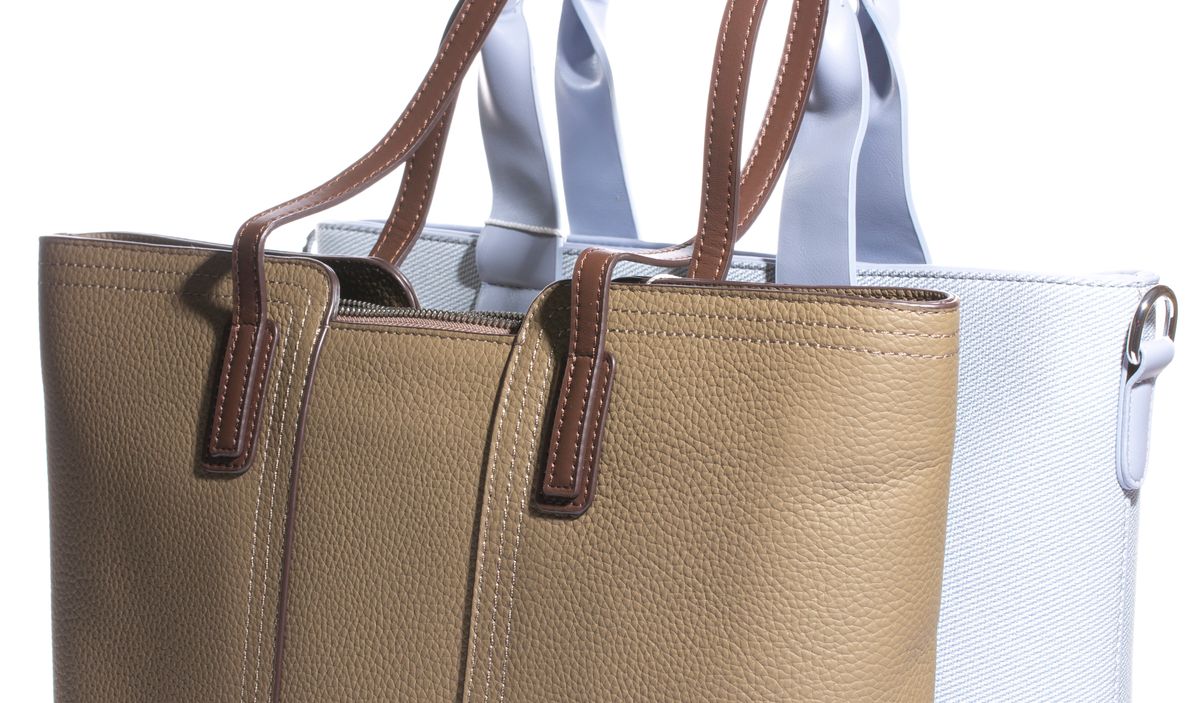
Similar silhouettes, different tare weights — the grams hide in hardware, structure and trim.
Where the grams go
Four things add empty weight, and only some of them add value. Fabric is the base: a coated nylon tote uses a few hundred grams of cloth, while a full-grain leather version of the same shape can easily triple that before anything is added. Hardware is the second add — brass feet, D-rings, zip pulls and a heavy clasp each carry real mass, which is why our handbag hardware guide treats hardware as both a durability signal and a weight line item. Structure is third: stiffeners, reinforced base panels and laptop frames add grams that earn their keep in shape retention. Trim is fourth — leather edging, dense linings, decorative layers — and this is the category that adds weight without adding function.
When you pick up a bag that feels denser than its size suggests, run the audit in that order. Weight that bought structure or reinforcement is an investment; weight that bought trim is a tax. The distinction matters more for everyday bags than for occasional ones, because the tax is paid on every trip out of the house.
Empty weight and the shoulder tax
Carrying mechanics make empty weight matter more than most buyers expect. A tote concentrates its load through one pair of handles, and the strap presses into the same strip of shoulder whether the bag holds two pounds or ten. Our tote versus crossbody versus shoulder guide covers how strap drop moves that load around the body; the point here is that the load’s baseline — the empty bag — is included in every one of those numbers. Six hundred grams of empty tote is the equivalent of carrying a half-litre bottle of water before you have put anything in.
Over a year of commutes, the arithmetic compounds. A daily bag carried two hours a day at 300 grams extra costs more than two hundred hours of additional load per year. Nobody consciously notices a single commute, which is exactly why the spec is worth checking before purchase rather than after a month of aching shoulders. Buy the weight the way you would buy a subscription: for the recurring cost, not the first impression.
Reading the spec like a maker
When a listing does publish weight, read it against three reference points. First, compare it to a documented bag of the same type: a small nylon tote that lists heavier than the Bellroy figure above is carrying something worth identifying, or worth questioning. Second, compare it across the brand’s own sizes — the jump from a 12L to a 15L tote documenting only 100 grams tells you the structure is shared, while a doubling of weight between sizes signals added hardware or panels. Third, compare material claims to the number: a “lightweight” claim on a bag that documents no weight at all is marketing, and a brand confident in its lightness publishes the figure.
Where no weight is published, you can still estimate in store. Pick the bag up with one hand by a single strap, fully empty, and note whether it feels like fabric or like a box. Weigh it against a known object — a bottle, a book — and set your own limit before you shop, the same way you would set a budget. The bags that fail long-term are rarely the ones bought slightly small or slightly plain; they are the ones bought heavier than their owner planned.
Test loaded, decide empty
The loaded test still comes first: put your real daily contents in and walk, as with any bag purchase. But decide the purchase on the empty weight, because contents are under your control and the tare is not. If your daily load already runs near the comfortable ceiling for a one-strap carry, every gram of empty weight pushes the total past the point where the bag stops being pleasant and starts being work.
For leather buyers the same logic applies with one extra step. Leather bags gain nothing from being bought light at the expense of the construction checks that matter — stitching density, edge finishing, hardware mounting — which is why our secondhand leather checklist starts with those and treats weight as a data point, never a verdict. A well-built bag can be heavy. The goal is simply to know which grams you are buying, and to pay for them on purpose.
FAQ
- How heavy should an everyday bag be empty?
- A soft nylon or canvas tote should land between roughly 250 and 400 grams empty; structured leather or laptop-capable totes commonly run 600 grams and up. The right number depends on what you carry, but anything over a kilogram empty is a bag you will feel by the end of the day.
- Why do brands rarely publish bag weight?
- Weight varies by hardware, trim and size variant, and a heavy number reads badly next to a competitor's photo. Brands that publish it tend to sell weight as a feature — packable totes, travel brands and technical-bag makers — while fashion houses leave it out of the spec sheet entirely.
- Does a heavier empty bag mean better construction?
- Not reliably. Weight can come from reinforcement and full hardware, but it can equally come from thick linings and dense trim with no structural payoff. Compare the weight against what the construction claims to deliver, not against the assumption that more mass means more quality.
Zipper brands, sizes and slider types are the fastest honest signal on a bag —…
Suede, twill, nylon and coated-canvas bag linings compared: how the interior…
How to read a handbag's hardware like an appraiser: zipper brands such as YKK,…
What makes a top-handle bag stand up on its own: self-supporting materials, a…