Suspended Sleeves and Laptop Compartments
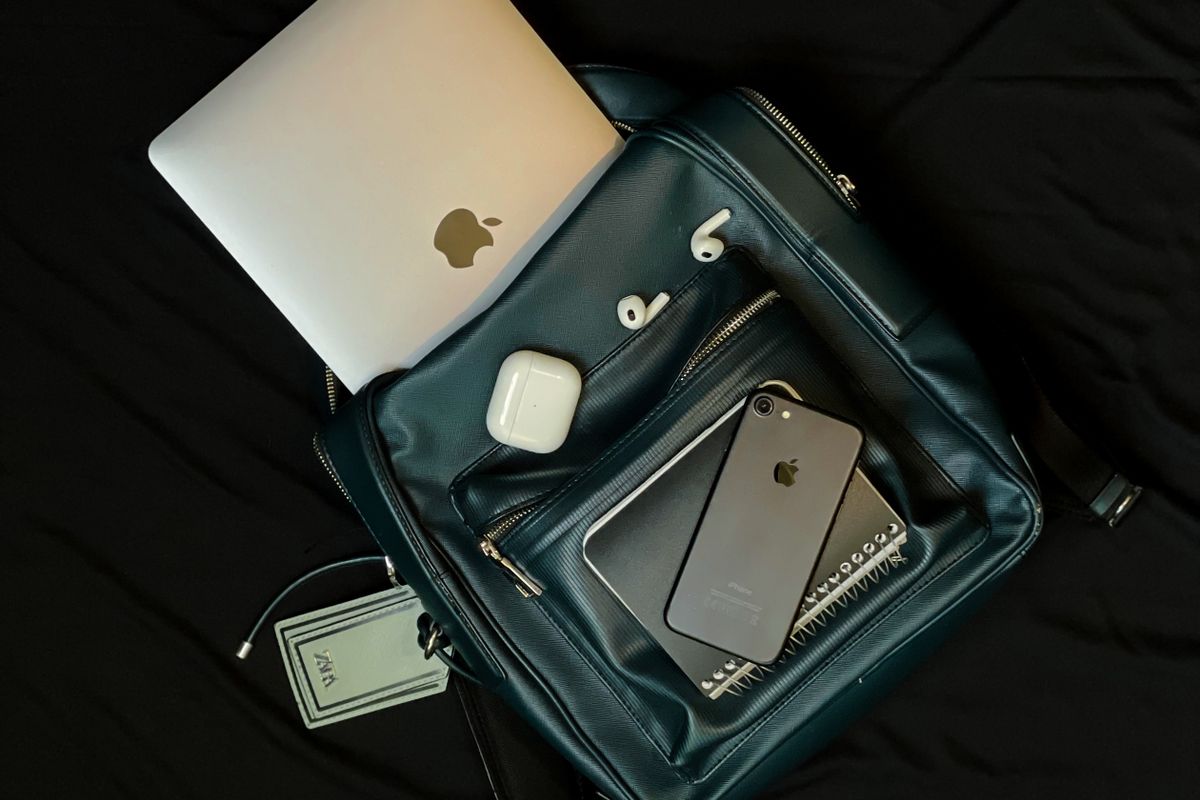
Most laptop damage in transit comes from one event: the bag is set down, or dropped, and the bottom corner of the machine takes the hit. Everything about a good laptop compartment follows from that fact. The compartment is not really storage — it is a drop cushion that happens to hold a laptop.
What “suspended” actually means
A suspended sleeve keeps the floor of the laptop above the floor of the pack. The gap — foam plus air — acts as a crumple zone. When the bag lands flat, the base panel absorbs the strike and the laptop stops before the ground does.
Brand pages describe this in their own words, so read for the geometry, not the adjectives. Aer documents its City Pack 2 pocket as “padded and suspended … with soft lining”, which is the pattern to look for: a lined pocket whose floor does not touch the base of the pack. Bellroy documents a “padded 16-inch laptop sleeve” in the Classic Backpack without the word suspended, which is why the next section matters.
The bottom-mounted sleeve problem
The common cheaper construction sews the sleeve floor straight to the base panel. Nothing separates the machine from the ground, and every set-down becomes a corner strike. Listing photos rarely show this; the spec sheet usually doesn’t say. You are looking for evidence of elevation — a separate compartment that starts above the base, a false bottom, or an explicit “suspended” claim with details behind it.
Sleeves inside the main cavity
Some packs skip the dedicated compartment and hang a padded sleeve on loops inside the main storage zone. Tom Bihn’s Synapse line documents Cache sleeves that attach to built-in loops this way, up to a documented laptop size. The construction can protect well, because the sleeve gets cushioning from the packing around it — but only if there is packing around it. Run the cavity half-empty and the sleeve floats loose, with nothing to break a fall.
Tipping is the second failure mode
Flat drops get the attention, but bags spend their lives upright and tipping over. When a pack falls sideways, the laptop’s edge takes the strike, and a sleeve that holds the machine loosely lets it slide — which erases the suspension gap exactly when it’s needed. A snug closure on the compartment, a strap over the machine, or simply a sleeve cut close to the laptop’s height all keep the cushion aligned. Run the mental test: pack the bag, tip it on its side, and ask where the machine ends up.
What to check, in order
First, where the sleeve floor sits relative to the base panel. Second, the lining — a soft interior, as Aer’s own description notes, protects the finish, not the frame. Third, the side walls and closure, since laptops also fail edge-on when a bag tips over. Fourth, whether the compartment doubles as the documents pocket, which usually means filler paper cushions your machine.
Our guide to reading a product listing covers spec-sheet reading in general, and the commuter backpack guide applies these checks to daily rail carry, where set-downs happen twice a day.
FAQ
- How much clearance does a suspended laptop sleeve need?
- There is no industry standard, so judge by construction: you want a visible gap, roughly a centimetre or more of foam and air, between the floor of the sleeve and the floor of the pack. If the sleeve bottom sits flat on the base panel, it is not suspended.
- Is a false bottom the same as a suspended sleeve?
- Functionally close. A false bottom creates a buffer zone under the sleeve floor, which absorbs a set-down impact the same way. The check is the same: the laptop must not be able to slide past the buffer when the bag is carried vertically.
- Does a hard-shell laptop case make suspension unnecessary?
- No. A hard case protects against scratches and squeezing, but it transmits impact energy rather than absorbing it. Drop protection comes from the gap and the foam, so a suspended sleeve still matters inside a hard case.