Silk Scarves: Momme Weight and Weave
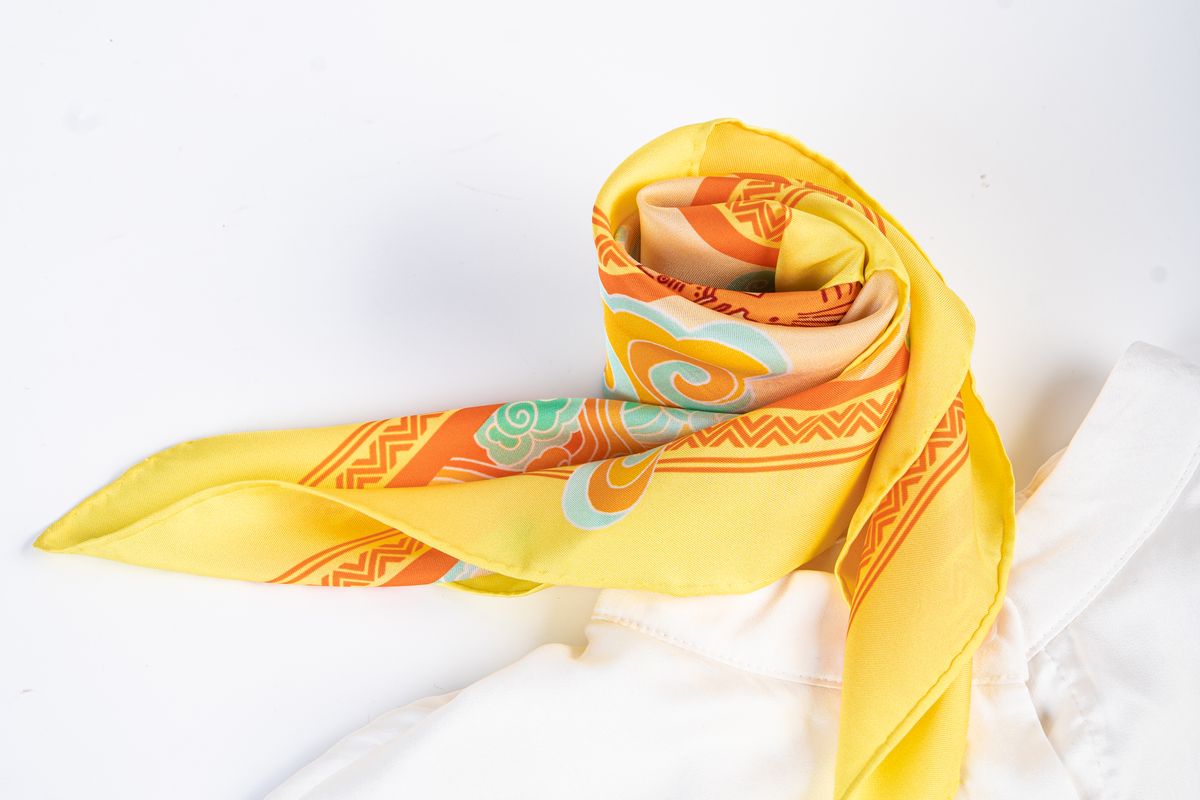
A silk scarf is either bought once and kept for decades, or bought cheap and retired in a season. The difference is written in two numbers most listings never state: the momme weight and the weave. Both are checkable before you pay, and both decide how the cloth handles sun, knots and repeated pressing.
Momme measures weight, not quality
Momme is a Japanese trade unit with a physical definition: the weight, in pounds, of a bolt of silk 45 inches wide and 100 yards long. One momme corresponds to roughly 4.34 grams per square meter, so a 12-momme fabric sits near 52 gsm. The scale tells you how much silk is actually in the cloth. Mills hit a target momme by adjusting yarn thickness and weave density, which makes it the closest thing silk has to an honest, comparable spec — closer than thread count, which shifts with yarn size.
What each weight does
The ranges follow the weave. Silk chiffon runs roughly 6 to 8 momme. Habotai, the plain-weave lining silk, spans about 5 to 16. Crepe de chine falls between 12 and 16, and charmeuse — the satin-faced weave behind most scarves and pillowcases — typically runs 12 to 19 and above. A lightweight summer scarf lives around 8 momme. Step up and the cloth gains opacity, snag resistance and body, at the cost of bulk in a knot. That trade is a choice, not a defect: a heavy twill squares the shoulders of a coat, while an 8-momme chiffon disappears around a neck. Neither weight is the wrong one. The wrong outcome is paying heavyweight prices for cloth that is not there.
Twill or plain
Weave decides how the weight behaves. In a twill, each weft passes over and under staggered warp threads, producing the diagonal ribs you can see by tilting the cloth toward light. That structure drapes with more fluidity, resists wrinkling, and holds fine printed detail — the classic French carré is silk twill for exactly these reasons. Plain weaves such as habotai and organza look identical on both faces, wear lighter at the same momme, and catch on jewelry more readily. If you plan to wear a scarf printed side out against a coat, twill is the more durable partner; if you reverse-wear it often, a plain weave spares you the two-faced look.
Reading the listing
A serious listing names the fiber percentage, the momme or the gsm, and the weave. “100% silk” alone tells you the species, not the substance — the same words cover a 6-momme veil and a 19-momme satin. Polyester “satin” at silk prices is the standard substitution: a cooler hand, a harder shine, and a label that quietly says 100% polyester. Fold a corner and press; silk creases softly and recovers, synthetic satin holds a sharp memory crease. The same appraiser’s habit applies to every category — our guide to reading a product listing breaks down the spec vocabulary, and the rest of the accessories range follows the same rule: numbers on the label, or no purchase.
FAQ
- What momme weight is best for a silk scarf?
- Around 8 to 12 momme suits most scarves: light enough to knot cleanly, dense enough to resist snags. Crepe de chine at 12 to 16 momme adds drape and body; habotai below 8 momme wears sheer and delicate.
- Is a higher momme count always better?
- No. Higher momme means a denser, heavier weave, which suits bedding and structured pieces. On a scarf, extra weight can fight the fluidity you bought silk for. Match the number to the use, not to the maximum.
- How do I convert momme to grams per square meter?
- Multiply momme by roughly 4.34. A 12-momme scarf therefore sits near 52 gsm. If a listing quotes only gsm, divide by 4.34 to put it on the same scale as the weights you already know.