Wallet Construction: Bifold, Cardholder, Stitching
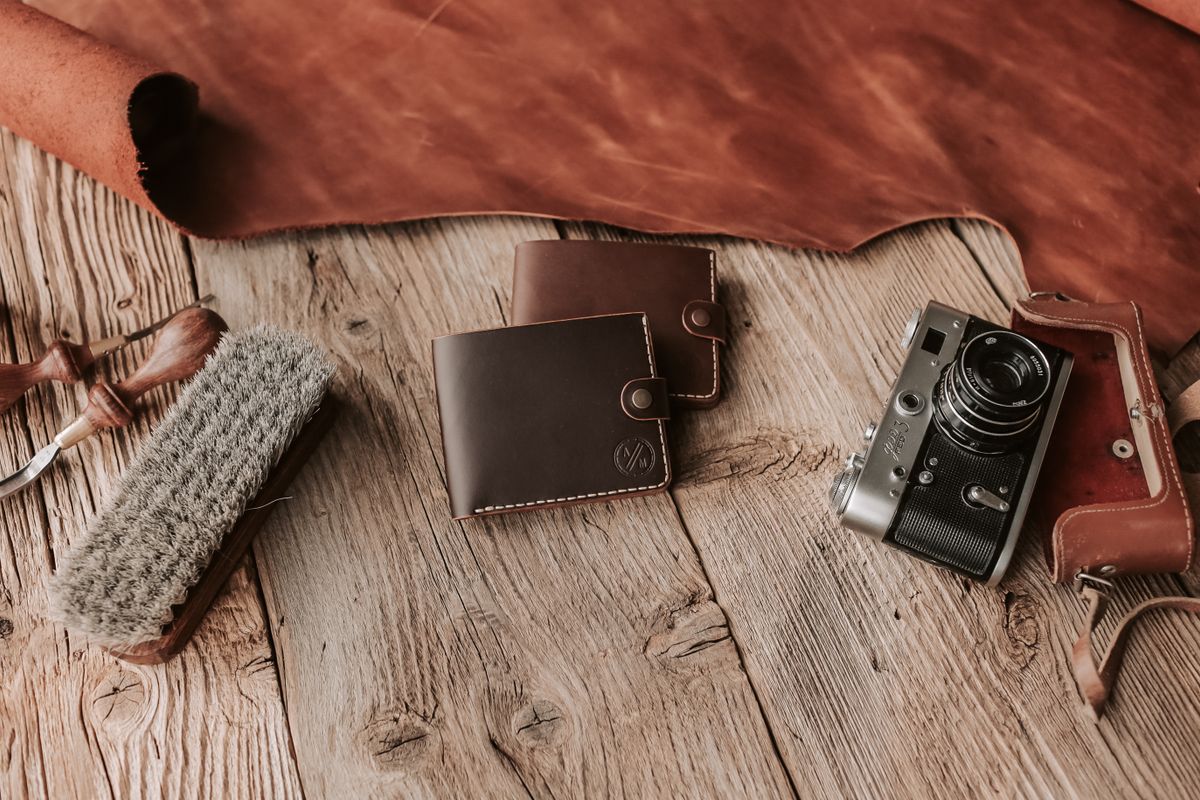
A wallet almost never fails on the face of the leather. It fails at the edges, at the seam, and at the fold — the three places where construction decides everything and the grade name printed on the tag decides nothing. Those three places are all visible before you pay.
The fold decides the daily bulk
Fold type is a carrying decision first and a style decision second. A cardholder is two panels of leather stitched at the edges — minimal bulk, a handful of card slots, no cash storage to speak of. A bifold folds once, which adds a crease point but buys a bill compartment and room for six to a dozen cards. A trifold folds twice, so the same stack of contents sits at double thickness, and the creases multiply the places a wallet can split. The physics are unforgiving: every fold is a stress point that flexes tens of times a day. Carrying less in a simpler fold is the cheapest durability upgrade available — a bifold overstuffed with receipts will die at the spine regardless of what the listing says about full-grain leather.
Stitching: saddle stitch versus machine
The hand saddle stitch uses two needles and a single thread, crossing in every hole so each stitch locks independently. Snap one stitch and its neighbors still hold the seam — this is why saddlery has used the method for centuries. A machine lockstitch ties each stitch with a bobbin thread, and when one stitch fails, the run behind it can walk open. But the thread matters as much as the method: polyester and nylon thread shrug off moisture, while cotton thread rots and is the standard failure point on otherwise decent leather goods. A tight, even machine seam in synthetic thread will outlast a sloppy hand seam, so judge the spacing and the thread, and treat “saddle stitched” as a claim to verify, not a guarantee.
Edges: paint, burnish or raw
The edge is the cross-section of the wallet, and it is where honest construction is easiest to read. Good edge paint goes on in several thin coats, sanded between each, until the edge reads as one hard, glossy line flush with the leather. One fat coat over a soft edge is the budget shortcut, and it cracks along the spine within a couple of years. A burnished edge — vegetable-tanned leather slicked with gum and wax until the fibers fuse — is the traditional finish and ages like the rest of the hide. A raw, unfinished edge on a multi-panel wallet is a red flag, because paint is also the easiest place to hide a split-leather core.
Reading the listing
The same three questions apply to any listing: what grade of leather, what thread, what edge. For the grading vocabulary itself, our guide to leather grades without the marketing decodes the terms, and if you are buying secondhand, the checklist in checking secondhand leather walks the edge and seam inspection step by step. For keeping the winner alive, the materials and care guides cover conditioning without darkening.
FAQ
- Bifold or cardholder — which should I buy?
- Count what you carry. A cardholder holds four to eight cards flat and disappears into a front pocket; a bifold trades bulk for bill storage and more card slots. If you never carry cash, the bifold's bill compartment is dead weight.
- Why does edge paint crack on cheaper wallets?
- Edge paint is a liquid coating applied in layers. A single thick coat flexes differently from the leather under it and cracks along the fold within a year or two. Quality finishing means several thin coats, sanded between each, or a burnished edge on veg-tanned leather.
- Is hand saddle stitching worth paying for?
- It is the more durable seam: each stitch is locked independently, so one broken thread does not unravel the row. But a well-executed machine stitch in polyester thread is still a decades-long seam. Pay for leather grade and edge work first; treat saddle stitching as a bonus.