Leather Grades Without the Marketing
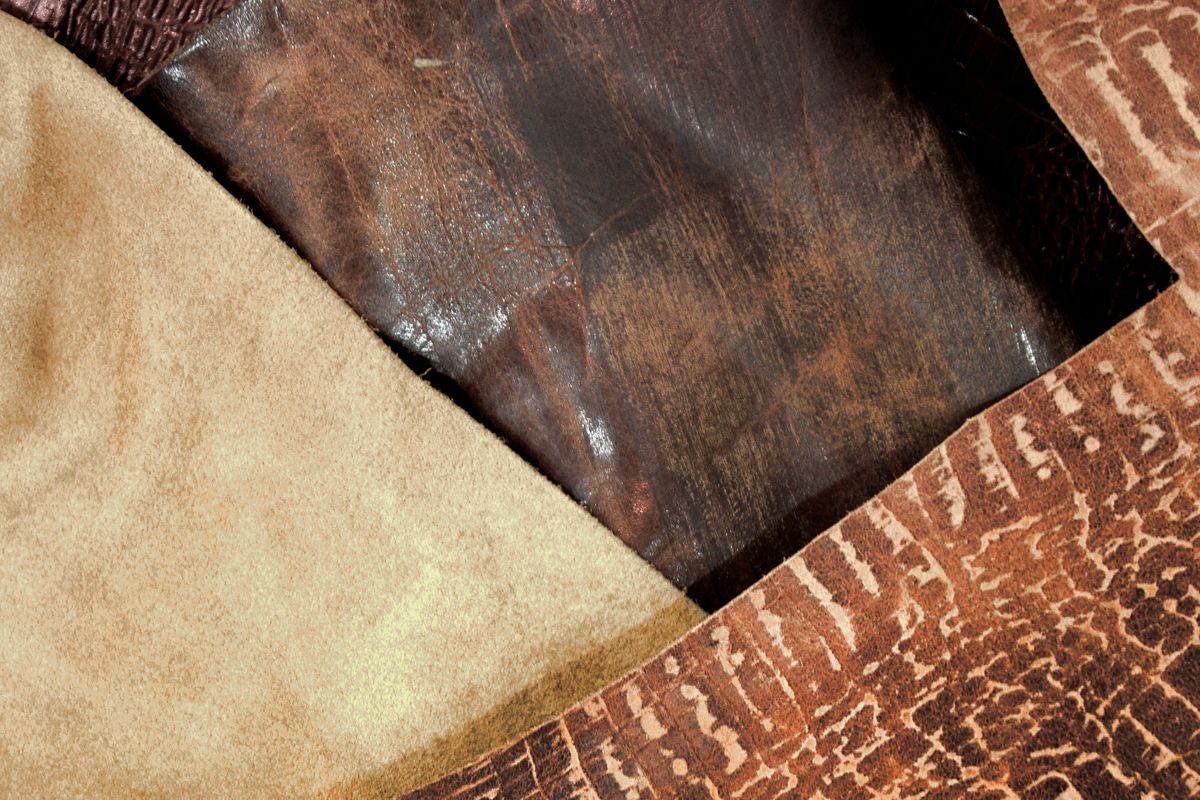
Leather grading vocabulary exists to sort a hide into its layers. Marketing has borrowed the same vocabulary to blur them. The four terms below describe real, different materials — knowing what each one means lets you read a handbag listing without being flattered into overpaying.
The fix is structural knowledge rather than brand trust. The terms describe physical layers of one hide, the layers behave differently under years of flexing, and each term leaves readable traces in photos.
Full-grain: the untouched outer layer
Full-grain leather keeps the hide’s outermost surface, including its natural grain and any small marks. It is the strongest cut, it develops a patina rather than wearing through, and it can’t be produced from heavily scarred hides, which is why it costs more. On a bag, full-grain means visible character and decades of life.
Because flaws cannot be sanded out, real full-grain carries marks — range brands, insect bites, small scars. A panel with a perfectly uniform surface labelled full-grain is corrected leather wearing the wrong name. Proud makers also name the tannery outright, because the tannery is part of the claim.
Top-grain: sanded for consistency
Top-grain is the next layer down, lightly sanded to remove imperfections and usually finished with a pigment or seal. It remains a single piece of hide — genuinely durable — but the surface treatment means it stiffens and fades rather than patinas. Most reputable mid-priced handbags use it, and for a structured bag that keeps its shape, that’s a reasonable trade.
The sanding and pigment that make it consistent are also what make it cheaper per hide: more of the hide qualifies once flaws are removed. That finish is likewise why top-grain resists stains better than full-grain. The exchange is character for predictability, and on a bag that lives through a daily commute, predictability is a fair buy.
Genuine leather: a label, not a grade
“Genuine leather” appears to promise authenticity, and it is real leather — but the term has no position in the hide’s layer structure. It is commonly used for split leather, the lower layers sliced from the hide, often corrected, embossed and finished to resemble grain. A “genuine leather” belt or bag can range from decent to the weakest material in this list.
One photo check: real grain never repeats. Embossed split leather shows the same pore pattern recurring across a panel, most visibly on large flat areas.
Bonded: the floor of the market
Bonded leather is leather fibre reconstituted with adhesive, pressed into sheets. It peels rather than wears and rarely survives years of flexing. On a product page, “bonded” anywhere in the description is the clearest sign to keep walking.
It fails at flex points — strap folds, handle bases, belt creases — because the adhesive layer fatigues where the material bends every day. That is why bonded damage looks like flaking skin rather than scuffing.
How to verify without touching
Product photos of the edge and the lining tell you a lot: a thick, fibrous, unpainted edge usually indicates full- or top-grain; a glossy painted edge can be hiding a split core. Makers who are proud of their leather state the cut and the tannery. Our belt-buying guide applies this checklist to one accessory in detail, and our conditioning guide covers keeping the good stuff alive.
Weight helps at the buying stage too. A dense, substantial bag is hard to fake with bonded sheet, and a listing that states the cut, the tannery and the hardware metal has already answered most of the questions a store visit would.
FAQ
- Is genuine leather good quality?
- Not necessarily. 'Genuine leather' is a broad labeling term, not a quality tier, and it frequently describes split leather that has been corrected and finished. A full-grain or top-grain label tells you more.
- Why does full-grain leather cost more?
- It uses the outermost, uncorrected layer of the hide, which is the strongest part and can only come from cleaner hides. Flaws can't be sanded out, so fewer hides qualify.
- Does top-grain leather last long?
- Yes. Top-grain is a single piece of hide one layer below full-grain; it is slightly weaker but still durable, and its sanded, finished surface resists staining. It trades some character for consistency.
Structured Top-Handle Bags That Hold Their Shape
Updated Sep 26, 2026 · Read more →