Washing Wool: Temperature, Detergent, Drying
A wool fiber is covered in scales, like shingles on a roof. Under heat, moisture and agitation those scales catch on one another, fibers creep past their neighbors, and the knit locks into a dense mat felt. That is shrinkage. It is not water damage — wet wool is fine. It is wet wool plus movement plus warmth, and the washer supplies all three at once.
Once felted, the structure is permanent. Every rule below exists to keep those scales from engaging.
Temperature: cool and constant
Use cool water, and keep the wash and rinse within a few degrees of each other. Sudden temperature swings shock the fiber, and heat softens the scales’ grip just enough for movement to do damage. Lukewarm is the ceiling, not the target. Nikwax’s hand-wash instructions for its Wool Wash specify hand-hot water at most, followed by three thorough rinses — the point of multiple rinses is removing all residue, since detergent left in the knit attracts dirt and dulls the fiber.
Treat stains before the soak. Nikwax’s instructions call for working its Wool Wash undiluted into stubborn spots ahead of washing — the same pre-treatment logic as any laundry, applied gently with a fingertip rather than scrubbed.
Detergent: gentle, and no enzymes
Use a detergent made for wool or a mild pH-neutral liquid. Skip biological formulas and standard softeners: enzymes in bio detergents attack protein fibers — wool is protein, like hair — and Nikwax notes that conventional household detergents and conditioners impair wool’s wicking and, over repeated washes, encourage pilling. A dedicated wool wash such as Nikwax Wool Wash cleans without either problem. Fabric softener is unnecessary regardless: wool does not need it.
Agitation: squeeze, never scrub
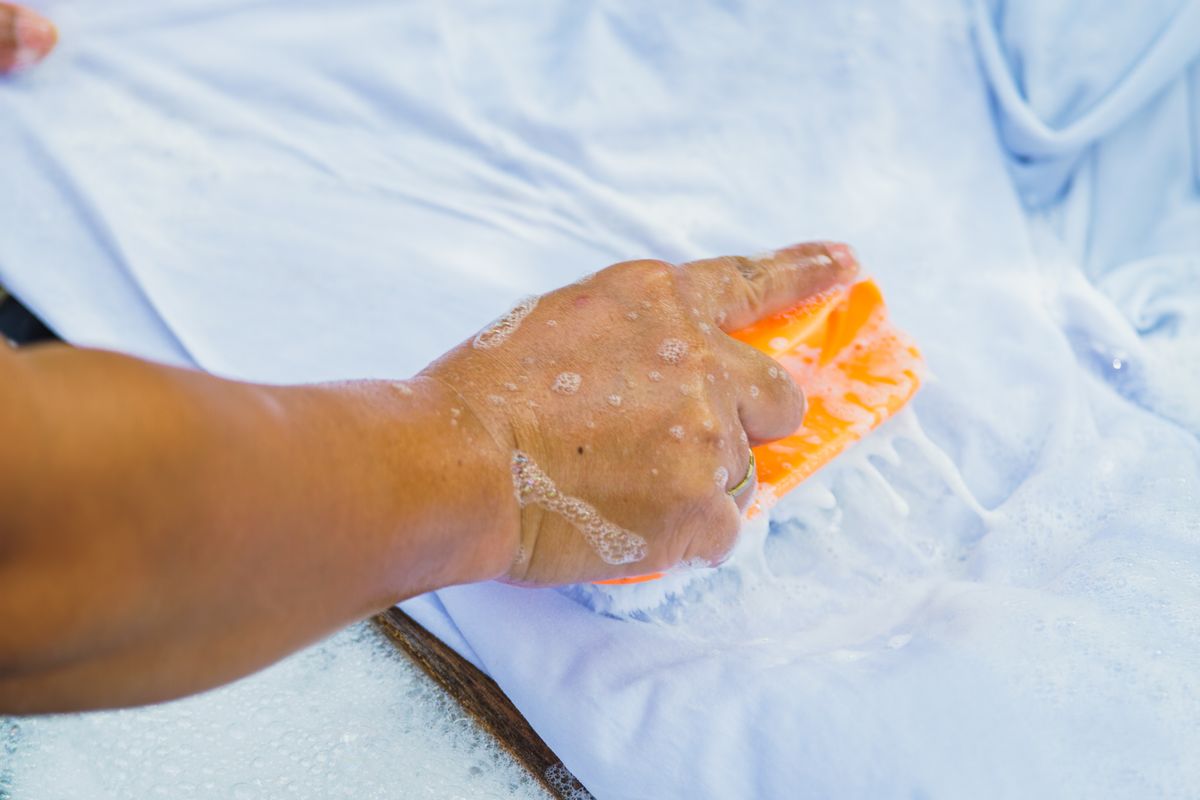
Hand washing means pressing the knit through the water, squeezing it like a sponge. Twenty minutes of soak does the work that rubbing thinks it needs to. Never wring — twist one end while holding the other and you have built a felting machine. Press water out against the basin wall or roll the piece in a towel and stand on the roll.
Drying: flat, always flat
Wet wool is heavy, and gravity stretches a hanging sweater at the shoulders, permanently. Lay the piece on a dry towel, shape it to its measured dimensions, and let it dry flat, turning it once. Keep it away from radiators and direct sun; fast heat makes wool brittle. Skip the dryer entirely — Nikwax’s care guidance notes that tumble drying can shrink or felt wool, and the dryer is the single fastest felting machine in the house.
Wash wool when it needs it, not after every wear; air and rest do most of the freshening. The same fiber logic explains pilling — see cashmere pilling: what actually helps — and what a label tells you before you buy, in reading a sweater label.
FAQ
- Does a shrunken wool sweater have any chance of recovery?
- Slightly. Soaking it in lukewarm water with a little hair conditioner, then easing it back toward shape while damp, can reclaim part of the loss. Felting permanently locks fibers together, so expect improvement, not restoration.
- Can wool ever go in the washing machine?
- If the care label permits it, use a wool cycle — low temperature, minimal spin, short duration. The risk is not the water itself but agitation and heat together, which is exactly what wool cycles reduce.
- Is fabric softener okay on wool?
- No. Softeners coat the fiber and can dull wool's natural moisture control. Nikwax states plainly that its wool cleaner should not be used with fabric conditioner; wool needs no softening.