Reading a Sweater Label: Gauge and Ply
Most sweater labels tell you the fibre and almost nothing else. Yet the two construction numbers that actually predict how a sweater wears — gauge and ply — are easy to print, and their absence is itself information. Neither requires touching the garment to evaluate: both are printed or omitted as-is, which makes them the cleanest quality signal on any knitwear listing.
Gauge: density and drape
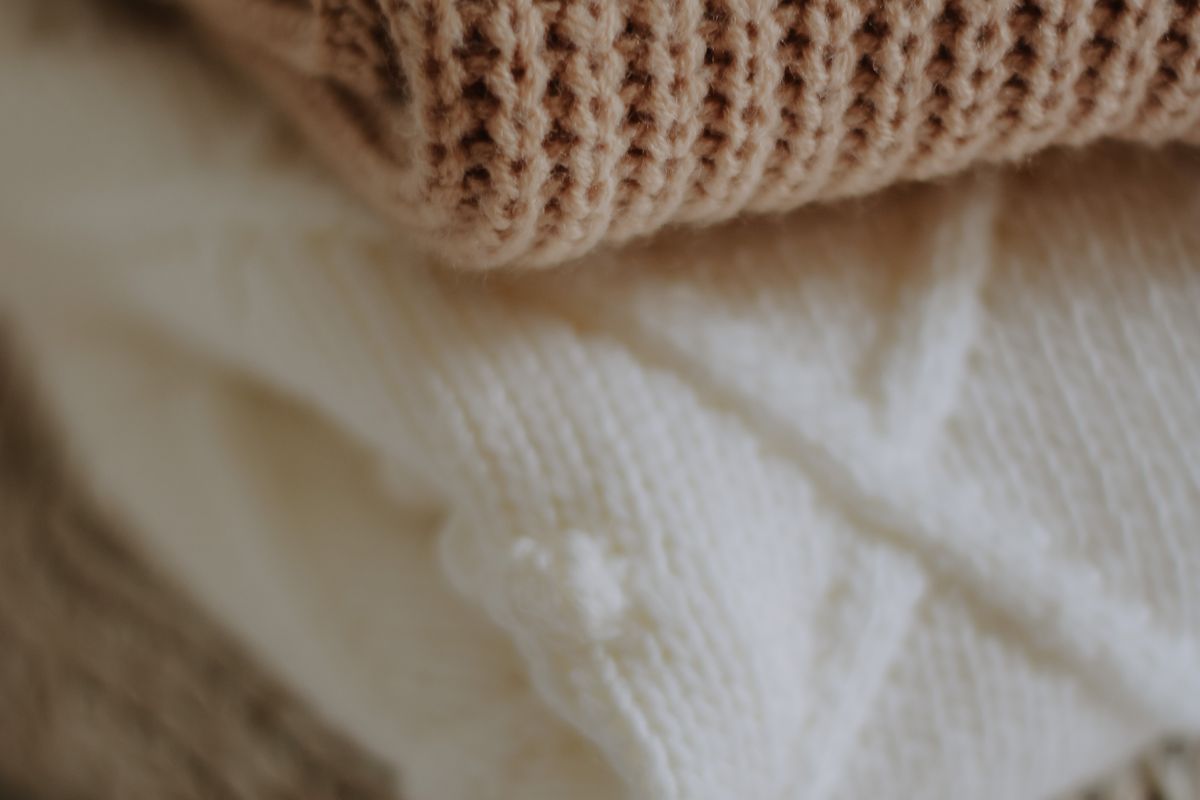
Gauge counts the needles per inch in the knitting. A fine-gauge knit (12–16 on the common scale) is dense, smooth and dressy, holds its shape under a jacket, and shows its fibre’s quality honestly — there is nowhere for a weak yarn to hide. A low-gauge knit (3–7) is chunky, casual and forgiving; it drapes into cables and texture, and its airiness is part of the point.
For office wear, fine gauge wins on versatility. For warmth per gram, low gauge traps more air. Neither is better; they are different tools.
Snag behaviour differs too. A dense fine-gauge surface shrugs off velcro, seatbelt webbing and bag straps; a loose low-gauge knit catches on all three. If the sweater will be worn under a coat with a rough lining or against a crossbody bag, the dense surface is the safer tool.
Ply: strands in the yarn
Ply is how many yarn strands are twisted into one. Single-ply knits feel soft and lofty out of the box and are the lightest — but a single strand has nothing restraining its short fibres, so single-ply cashmere is the classic pilling victim. Two-ply is more stable, holds shape longer and resists wind better; three-ply and up move into outerwear territory and weight.
Ply shows earliest at the cuffs and hem, the two areas that flex most: higher plies keep their elasticity there, while single-ply cuffs stretch into ripples within a season of weekly wear. A stated ply figure is also a proxy for the maker’s confidence — extra ply costs yarn, and brands that pay for it usually mention it.
Ply is not a pure quality ladder. A two-ply sweater of long-fibre yarn is a better buy than a four-ply of short fibre, because fibre length drives pilling, not strand count alone.
The label checklist
Before buying a knit at any price, look for four things:
- Fibre and grade — “Grade-A cashmere” or a long-staple claim beats an unqualified “100% cashmere”. A grade or mill claim you can trace beats an adjective you can’t.
- Gauge or knit density — the finer the stated gauge, the more the maker had confidence in the yarn.
- Ply — two-ply or better for anything you’ll wear weekly. Single-ply is fine for a cardigan worn monthly; it is the wrong build for a daily knit.
- Yarn origin versus factory — “Italian yarn” sewn elsewhere is common and fine, but the two lines should both be stated.
None of this requires expertise. All four lines fit on a hang tag, and the makers with nothing to hide fit them there. A label missing all four is a commodity knit wearing a premium price. Our white-shirt, spec-checked approach applies the same reading discipline to shirting.
FAQ
- What does gauge mean on a sweater?
- Gauge is the number of knitting needles per inch — higher gauge means finer, denser knit. A 14-gauge knit is fine and dressy; a 5-gauge knit is chunky and casual.
- Is 2-ply cashmere better than 1-ply?
- Generally yes for durability: two yarns twisted together resist pilling and hold shape better. But fibre length and grade matter more than an extra ply — a 2-ply short-fibre sweater still pills.
- What should I check on a knitwear label besides material?
- Gauge (or stitch density), ply, and the country of the yarn versus the country of manufacture. A label that lists none of these is telling you the brand treats knitwear as a commodity.
Denim by the Ounce: From Summer Pairs to Selvedge
Updated Sep 26, 2026 · Read more →